.webp)

If you're serious about improving at Rocket League, there's a ceiling to what you can learn from just playing more games. At some point, the thing that separates players who rank up consistently from those who plateau is whether they understand what's actually happening in their matches beyond goals scored and saves made.
Rocket League replay analysis is how you get passed that ceiling. Here's everything you need to know about how it works, what to look for, and how automated performance analytics has changed what's possible.
What Is Rocket League Replay Analysis?
Every Rocket League match generates a replay file that captures the full data of the game: every touch, every boost pickup, every player position at every moment of the match. Replay analysis is the process of reviewing that data to understand performance at a level that isn't visible during live play.
At the basic level, that means watching your replays back and identifying mistakes. At a more advanced level, it means using analytical tools to surface patterns across dozens or hundreds of matches that you'd never be able to identify by eye.
What Metrics Actually Matter
Not all stats are created equal. Goals and saves are the ones that show up on the scoreboard, but they're also the noisiest indicators of performance. A great save doesn't tell you why your team was under pressure in the first place. A goal doesn't tell you whether it was the result of good decision-making or a lucky deflection.
The metrics worth paying attention to are the ones that measure quality, not just outcomes.
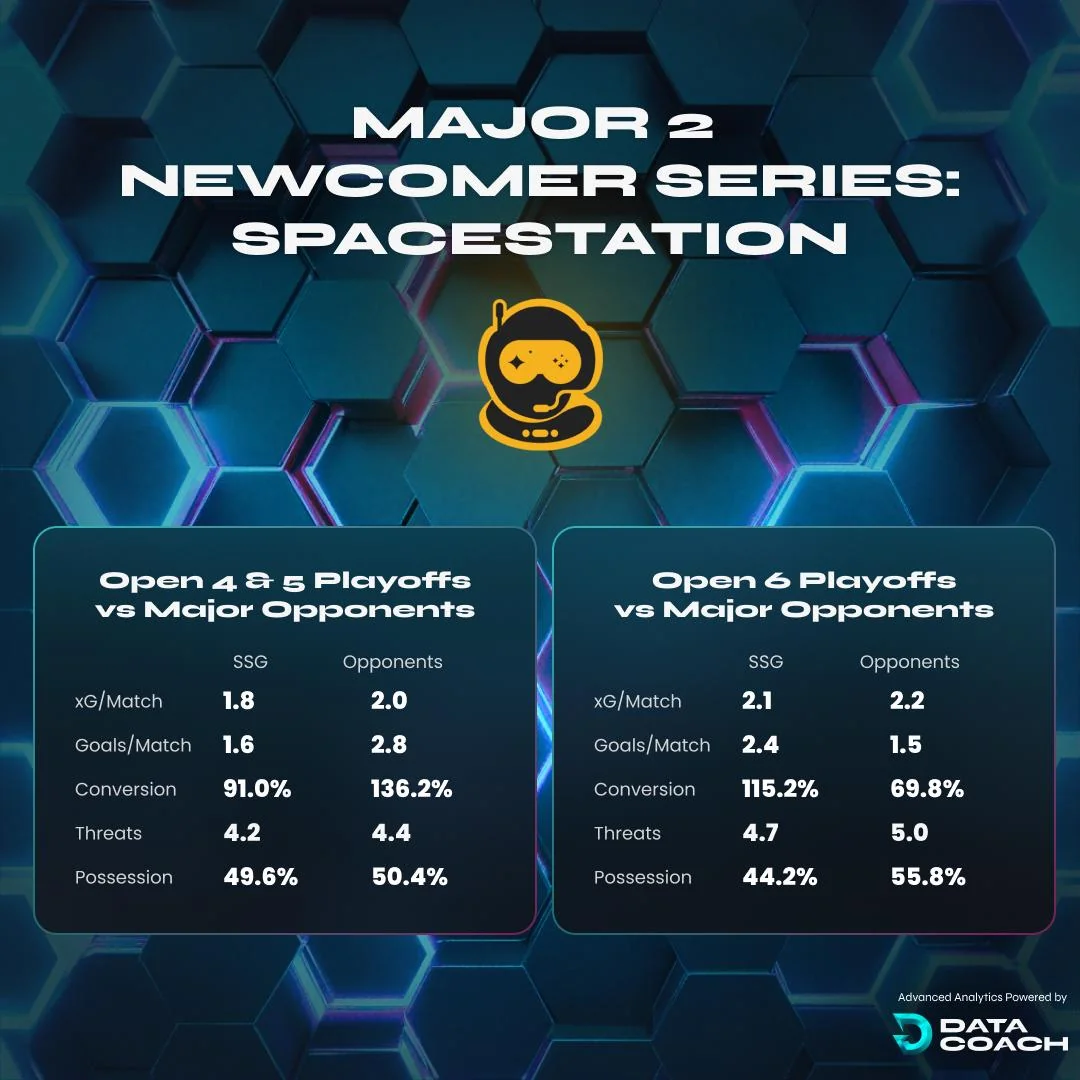
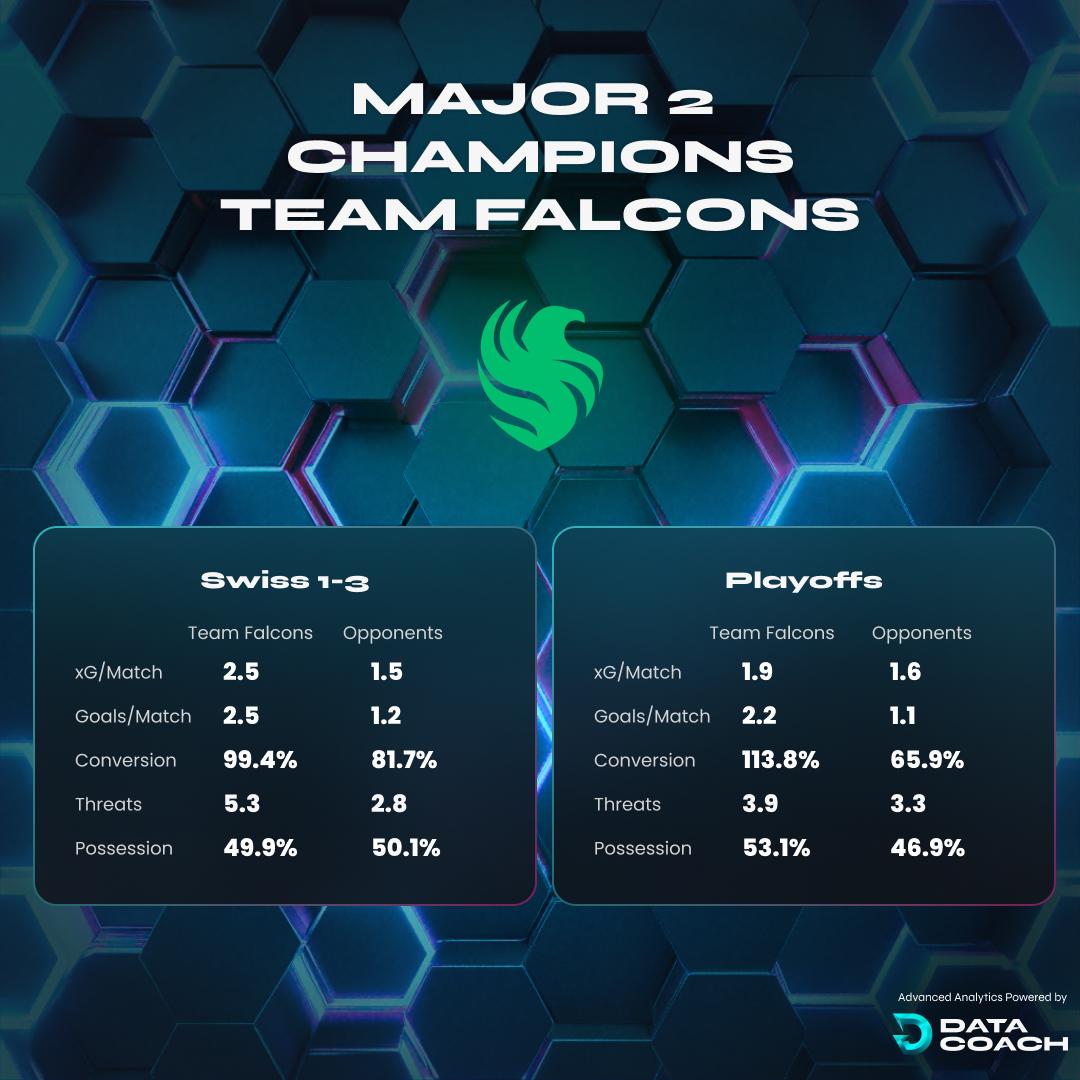
Expected Goals (xG) measures the quality of scoring chances generated, not just whether they went in. A team that consistently generates high xG but scores below expectation is likely underperforming due to conversion issues rather than chance creation. A team that consistently outscores their xG is probably due for regression. Understanding xG gives you a much more honest picture of what's actually happening in a match than the final scoreline alone.
Boost efficiency tracks how well a player manages their boost across a match. Poor boost management is one of the most common underlying causes of rotation breakdowns and missed defensive coverages, especially at lower ranks where it often goes unnoticed.
Positioning and rotation data looks at where players are on the field relative to where they should be, and how consistently they're maintaining their structure. Late rotations and ball chasing are the two most common problems at every rank below Champion, and positional data is the fastest way to identify whether they're happening.
Passing play metrics track uninterrupted passes that generate xG. This separates teams that are genuinely building dangerous attacks through teamwork from teams that are scoring despite poor structure rather than because of it.
How to Approach Manual Replay Review
If you're reviewing replays yourself without analytical tools, the most common mistake is watching the replay from your own perspective. You end up reviewing the moments you already remember, the shots you missed, the saves you made, without seeing the broader picture.
A more effective approach is to watch from a neutral camera angle and pay attention to what's happening off the ball. Where are your teammates when you're making a decision? Where are you when the ball is on the other side of the field? Most mistakes in Rocket League aren't the touch that goes wrong. They're the positioning decision two or three seconds before that created the problem in the first place.
The other common mistake is reviewing too much at once. One focused session reviewing a single game with a specific question in mind will teach you more than watching five games back to back without a clear focus.
Where Automated Replay Analysis Changes the Picture
Manual replay review is valuable, but it has a hard ceiling. You can only see what you're looking for, and you can only review so many games before the volume becomes unmanageable.
DataCoach solves both problems. DataCoach processes your uploaded replays and surfaces the metrics that matter across your full match history, not just the last game you played. Instead of spending an hour trying to identify whether your rotation timing is off, the platform tells you directly, with data across dozens of matches to back it up.
The practical difference is speed and objectivity. A player reviewing their own replays is working against confirmation bias. It's hard to see your own mistakes clearly, especially in the middle of a session where you're still emotionally attached to the results. Our software doesn't have that problem. It reads what the data says and surfaces it regardless of how the match felt.
For teams, the value compounds further. Understanding that your team's passing play conversion drops significantly in the third game of a series, or that a specific player's xG generation falls under pressure, are the kinds of insights that take weeks to surface through manual review. DataCoach can surface them from a single session of replays.
How to Use Replay Analysis to Actually Improve
Data on its own doesn't make you better. The players who get the most out of replay analysis are the ones who close the loop between insight and implementation.
The most effective workflow is straightforward. Identify one specific area from your data that is consistently showing up as a weakness. Work on that area in free play or training packs. Return to your replays after a set of matches and check whether the metric has moved. Repeat.
The mistake most players make is trying to fix everything at once. YourDataCoach dashboard might surface five different areas for improvement. Pick the one with the biggest impact and work on it until it stops being the biggest problem. Then move to the next one.
Getting Started
If you haven't done structured replay analysis before, the barrier to entry is lower than you might think. DataCoach lets you upload replays directly and start seeing your data immediately, no manual tagging or tedious frame-by-frame review required.
The free tier gives you enough to identify your biggest areas of improvement and start working on them in a structured way. For competitive players who want the full picture across their match history, the paid plans unlock deeper analysis.
Upload your first replay and see your data
The players who improve fastest aren't necessarily the ones who play the most games. They're the ones who understand what's happening in the games they're already playing. Replay analysis is how you build that understanding, and in 2026 there's no reason not to be using it.